

Shaker, Slim Shaker or Flat Panel? How to Choose Kitchen Cabinet Doors
By Master Kitchen · Published · Updated · 6 min read
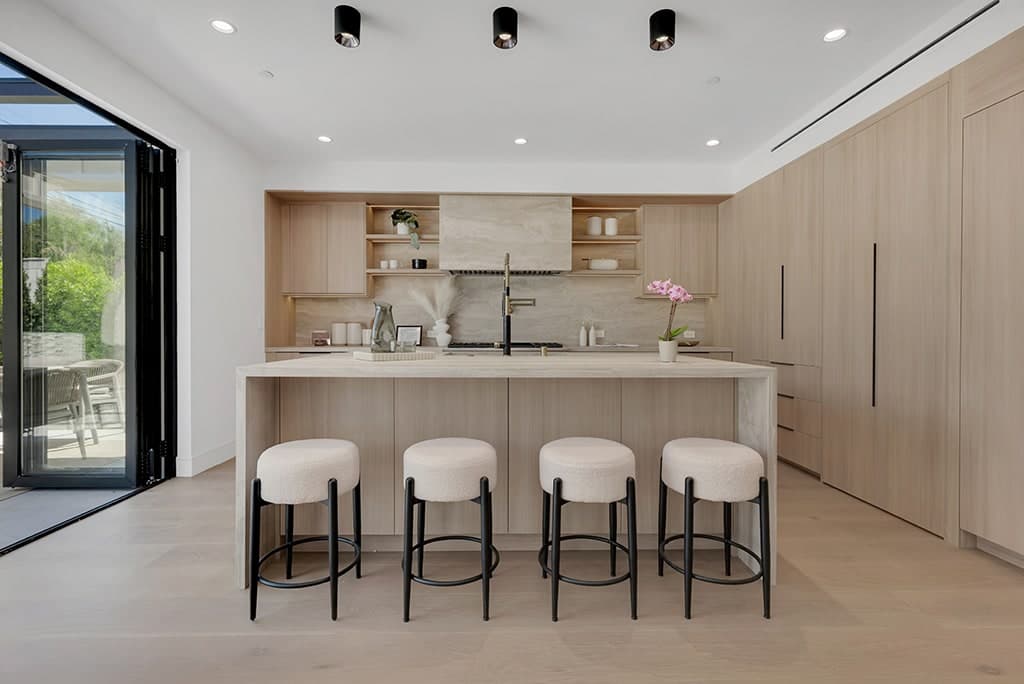
Choose Shaker if you want a classic, flexible door that suits most Los Angeles homes; slim Shaker if you like that frame but want a quieter, more modern line; and frameless flat panel if you want a clean modern look and the most usable space inside each cabinet. The finish you choose changes the feel of a kitchen as much as the door style does.
Most kitchen remodels come down to a handful of big decisions, and the cabinet door is one people think about longest. It sets the style of the whole room, it is the surface you touch every day, and it is hard to change later. Here is how the four door styles we offer differ, with real kitchens we built in each.
The four door styles, side by side
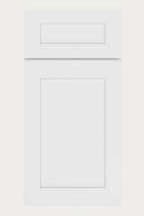
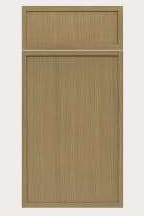
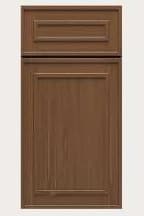
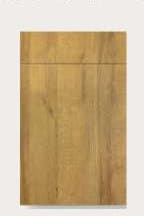
| Door | What it is | Looks | Lives |
|---|---|---|---|
| Shaker | A five-piece door: a frame of four pieces around a recessed flat center panel | Classic and transitional; works with traditional and modern rooms | The frame's inside edge collects a little dust and grease; easy to touch up |
| Slim Shaker | The same frame idea with narrower rails and stiles | Quieter and more contemporary than a standard Shaker | Same care as Shaker, with less frame to clean |
| Double Slim Shaker | The slim frame with a second step inside it | More shadow and detail; reads as tailored | The extra step is one more edge to wipe |
| Frameless European flat panel | Full-overlay slab doors on cabinets with no face frame | Clean, modern, uninterrupted lines | Flat faces wipe clean in one pass; the cabinet opening is wider without a face frame |
Shaker: the safe choice that is not boring
Shaker is the most requested door in Los Angeles kitchens for a reason: the recessed panel gives a little depth without fuss, so it fits a 1920s Spanish house as easily as a newer build. It also takes color well. In our own projects you can see it in natural oak with black hardware, in white with a built-in refrigerator wall, in green around a waterfall peninsula, and in a two-tone version with white uppers over wood base cabinets.
Choose Shaker when:
- you want a kitchen that will not look dated in ten years;
- the house has traditional or transitional architecture;
- you want to use color, because the frame shows a paint color off well.
Slim Shaker and Double Slim Shaker: the middle ground
If a standard Shaker feels a little heavy, the slim versions keep the frame but shrink it. Slim Shaker reads as more contemporary while still looking warm. Double Slim Shaker adds a second step inside the frame, which catches light and shadow and gives the door a more tailored look.
These suit homeowners who like modern lines but do not want a kitchen that feels cold, and houses where the rest of the interior mixes styles.
Frameless European flat panel: modern and practical
Flat-panel doors are plain slabs. On frameless cabinets they cover the whole cabinet box, so the fronts read as one calm surface. The practical bonus is inside: without a face frame, the cabinet opening is wider, which makes drawers and pull-outs easier to use.
Our West Hollywood kitchen is a good example of the look: light oak flat-panel cabinetry, a stone waterfall island and tall panels that run to the ceiling, with slim black pulls. Flat panels also suit mid-century homes, such as the single-story houses of Trousdale Estates in Beverly Hills, where long, low lines follow the architecture.
Choose flat panel when:
- you want a modern or minimal kitchen;
- you plan tall, floor-to-ceiling cabinetry or integrated appliances;
- easy cleaning matters more to you than ornament.
What matters as much as the door: the finish
Two kitchens with the same door can feel completely different. Wood finishes (white oak, natural oak, walnut tones) warm up any style; painted finishes (white, gray, blue, green, black) let you set the mood; high-gloss finishes on flat panels bounce light around a small kitchen. Our catalog is a sample of hundreds of options, and we show the real samples at the design consultation, next to your countertop choices. See the cabinet door styles and finishes.
How to decide in practice
- Start from the house. Look at the doors, windows and trim in the rest of your home. A kitchen that matches the architecture usually ages better.
- Decide on hardware at the same time. Shaker doors pair well with pulls or knobs; flat panels often look best with long, slim pulls or integrated finger pulls.
- Think about who uses the kitchen. Busy family kitchens benefit from fronts that wipe clean easily and finishes that hide fingerprints.
- See it in 3D before you sign. We show your kitchen in a 3D preview with the door and finish you choose, so you can compare styles on your own layout instead of guessing from photos.
- Ask to see the options in your proposal. If you are torn between two styles, ask for both to be shown in writing before you decide.
Browse our client stories and projects, then book a free design consultation. We will bring door and finish samples and show your kitchen in 3D before you decide.
Frequently asked questions
Is Shaker or flat panel more modern?
Flat panel is the more modern look. Slim Shaker sits between the two: it keeps the frame of a Shaker door but with narrower lines.
Which cabinet door is easier to clean?
Flat panels, because there is no recessed edge for dust and grease to settle in.
What is the difference between framed and frameless cabinets?
Framed cabinets have a face frame around the front of the box. Frameless (European) cabinets do not, so the doors cover the whole box and the opening inside is wider.
Can I mix door styles?
Yes. A common approach is one style on the perimeter and a different finish or style on the island. Our two-tone Shaker kitchen pairs white uppers with wood base cabinets.
Do you offer more door styles than these four?
These are the programs in our 2026 catalog, and the catalog is a sample: we show the full range of options at the design consultation.
Door styles and finishes shown are from Master Kitchen's 2026 catalog, a sample of the options we bring to the design consultation.